Q&A with HKUST Ocean Science Majors
By Sam Fan 樊潤璋

Andy NG
BSc in Ocean Science and Technology (with Extended Major in Artificial Intelligence) (2026)
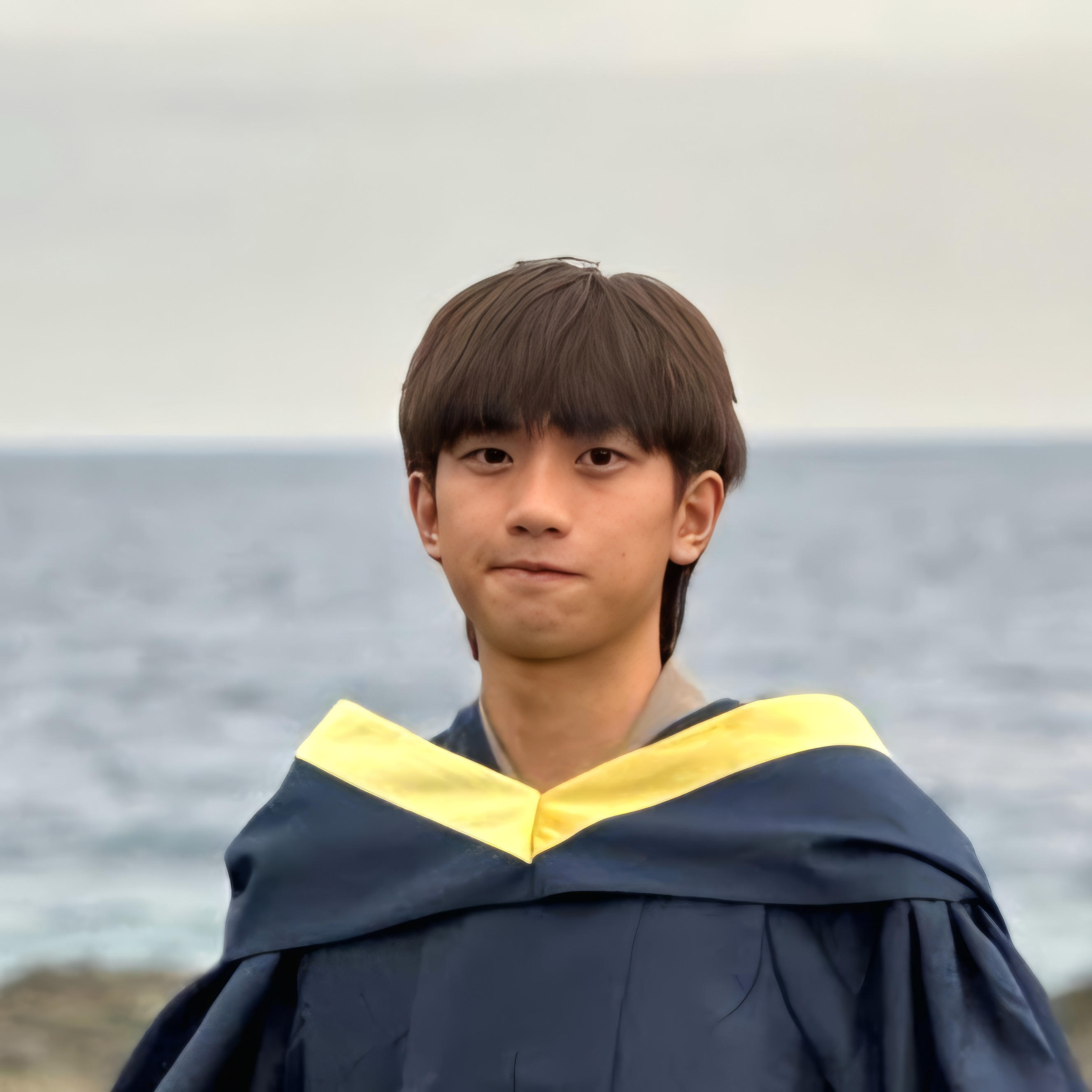
Harun TIN
Primary School Teacher
BSc in Ocean Science and Technology (2025)

Prof. Cindy LAM
Assistant Professor of Science Education, HKUST
PhD in Marine Environmental Science at University of Oldenburg, 2007
MPhil in Marine Environmental Science, 2003
BSc in Biology, 2001
In high school, students may only be exposed to conventional science subjects, so what exactly is ocean science?
Cindy
In secondary school, physics, chemistry, biology and geography are usually taught as separate subjects. However, the ocean is an enormous and complex system, so fully understanding it requires an interdisciplinary approach. Physical oceanography examines ocean currents, tides and ocean modeling; chemical oceanography investigates how pollutants and toxic substances react and disperse in seawater, and biological oceanography focuses on marine organisms and how they respond to environmental changes.
Harun
Geography and environmental science might deal with cities, industry, transportation and terrestrial environments all at once, whereas ocean science focuses more specifically on the natural processes that take place in the ocean. The ocean covers most of the Earth's surface, and there are many questions worth investigating. Within ocean science, students can choose a direction according to their own interests. For example, one may focus on marine organisms, ocean currents or chemical processes. You can also use computer models to study the ocean. The scope is broad, yet within each research direction you can delve deeply.
Andy
In secondary school, science is usually divided into separate subjects — physics, chemistry and biology. But university-level ocean science isn't neatly split. A single ocean phenomenon often requires explanations from several disciplines. It isn't just about listing different kinds of knowledge side by side; it's about how to draw on multiple disciplines at once.
What inspired you to study ocean science?
Cindy
My reason was simple: I love biology, ecology and the ocean. I wanted to learn more, so I took up diving. When I first saw the underwater world, I realized just how many different organisms and phenomena exist beneath the surface. It pushed me to think about what other questions related to the ocean were worth investigating further. Later, my research gradually extended from biofilms (slimy layers of microorganisms that form on surfaces) to diatoms (a group of microscopic algae with a cell wall made of silica). I had the opportunity to conduct macroalgae research in the North Sea, Germany. To conclude, my interest in marine life drove me to pursue studies and research in ocean science.
Harun
I love marine life ever since I was young. As a child, I often asked my parents to take me to Ocean Park. As I grew older, I enjoyed going to the beach to see starfish and other creatures. In secondary school, I once considered studying nursing, hoping to work in a profession that can help others. But later, while exploring different undergraduate programs, I learned that the ocean science program at HKUST would let me study the ocean in depth. I didn’t know there was such an option in Hong Kong. That reminded me of my love for the ocean, so it was natural for me to choose ocean science. But I have never given up my wish to help others — not always humans, though, as I’m now working on marine conservation to save animals. Meanwhile, I’m a primary school teacher. I hope I can raise environmental awareness and arouse students’ interest in wildlife, making the hard conservation work more effective in the future.
Andy
When I first entered university, I wasn't entirely sure of my direction. At first, I hoped to take a science program with some artificial intelligence elements and explore more possibilities. Many research questions do not have a simple or predetermined answer. What attracted me to ocean science is that we can collect samples and carry out fieldwork. We can consider how to incorporate artificial intelligence and monitoring technology into ocean research. This process of exploring the unknown drew me toward ocean science. Rather than focusing on abstract theories, I prefer exploring questions by experimental approaches — to search for evidence by conducting fieldwork.
The ocean covers most of the planet. What is still unknown out there that you find most exciting?
Cindy
What excites me most is that we are still discovering new deep-sea species every year. Because it is hard for us to reach the deep sea due to extreme water pressure, the encounters with those creatures are precious. Deep-sea animals may have no eyes or may have evolved special features, such as light-producing organs, to adapt to the dark, high-pressure environment. Discovering a new species is only the first step. We still need to understand why it exists, what role it plays in the ecosystem, and whether its appearance or disappearance signals that the environment is changing. These unanswered questions are what makes deep-sea research so exciting.
Harun
What surprises me most is that some marine organisms may unexpectedly make important contributions to humanity. For example, scientists can find compounds with medicinal potential in marine organisms, such as corals and sponges. Some of which even help with cancer research. This suggests that nature may already hold answers to long-standing questions. Unfortunately, human activities may destroy the habitats of certain species, or even wipe them out, before we realize their value. So, exploring the ocean is exciting on one hand, while on the other it reminds us of the urgent need for conservation.
Andy
For me, it is the fact that there are still many interactions between the ocean, the atmosphere and the land that we have yet to understand. I'm especially interested in physical oceanography. In my spare time, I use the Windy mobile app to observe changes in wind direction, waves and weather systems, and to see how they influence one another. Although we can now use computer models to predict changes in the ocean and atmosphere, the predictions are not fully accurate. There are many complex relationships yet to be studied. For example, how sea temperature affects the formation and intensity of typhoons, and how the movement of the ocean currents and atmospheric circulation gives rise to phenomena such as El Niño and La Niña. If we could grasp these changes more accurately, we could predict extreme weather further in advance and allow the government to take necessary measures. That is what makes ocean science both interesting and meaningful to me.
Are there any interesting fieldwork experiences or independent projects you can share with us?
Cindy
In recent years, I've focused on exploring how interactive technology can spark students' interest in ocean science. Classes can be much more interesting than just having a teacher explaining things at the blackboard.
With the support of the University, we initiated a project called “Marine XR.” After putting on a virtual reality (VR) headset, students can explore from the sea surface down to the deep sea through this “immersive” experience, appreciating different marine organisms and learning more about marine ecology and conservation issues through mini games.
Besides VR, we also worked with other universities to create a set of marine life trading cards that incorporate augmented reality (AR). Students simply scan a card with their phone, and then a three-dimensional marine animal pops up along with information on its habitat, conservation status and other relevant information.
The advantage of VR is its strong sense of immersion: It feels as though you're really beneath the sea, especially valuable for students who can't swim or are afraid of water. However, in a large class that involves several hundred students, it's difficult to provide enough VR equipment for everyone, so we use the cards to reach a wider audience. In the future, we also hope to integrate artificial intelligence and add multilingual support to the system. Perhaps also introducing interactions between organisms in the game, making the learning of ocean science more vivid and engaging.
Harun
My final-year research project investigated the number and distribution of horseshoe crabs on a mudflat on Lantau. There are only four species of horseshoe crab in the world today, two of which can be found in Hong Kong. My study site was one of the few places where both species occur on the same mudflat. During one peak-season survey, I found around 40 juvenile horseshoe crabs, which was an encouraging number. However, the site is not a protected area, and activities such as digging for oysters and clams damage the seagrass beds and the habitat of juvenile horseshoe crabs. This research drove home to me that even when we know a species is already under threat, the actual conservation measures may still be insufficient.
Another experience that left a deep impression on me was volunteering with a sea turtle conservation project in Malaysia. Because Hong Kong does have records of sea turtles appearing and laying eggs, there are relatively few opportunities for the public to take part in such conservation work. Many people therefore may not understand how sea turtles lay eggs, how the eggs hatch, and the survival threats the turtles currently face. I hope in the future Hong Kong can offer more opportunities like this, so that people can learn through practical experiences and become willing to take real action to protect marine ecosystems.
Andy
One highlight for me was visiting and sailing aboard a research vessel. Besides collecting and testing seawater samples, we could also observe how professional researchers work and live on board. We used instruments such as a conductivity, temperature, depth (CTD) profiler to collect data at different depths, and gather seawater samples from specified depths. We also recorded GPS positions and brought seabed sediment and plankton back to the laboratory for analysis. This experience allowed me to experience the actual working environment of ocean research beyond the classroom.
Before studying ocean science, what did you think this field was about, and how has your view changed?
Cindy
I first entered this field because I love marine life, but later I realized that you cannot look at the ocean solely from the perspective of animals. How humans use ocean resources, how pollutants are transported from one place to another by currents, and whether the exploitation of deep-sea resources will further affect the environment are all important questions. The ocean also influences the climate, human society and other ecosystems. Only by examining all these perspectives can we fully understand the ocean system and come up with ways to protect it.
Harun
At first, I thought ocean science was focused mainly about marine organisms. But through my undergraduate studies, I realized that marine organisms are also influenced by factors such as temperature, chemical substances, water currents and climate. It’s about the entire ecosystem — including everything from the atmosphere above to the deep ocean below. Even though animals are what interest me most, I still have to understand the physics and chemistry to explain their behavior, distribution and survival.
Andy
In secondary school, subjects are usually studied separately, and the connections between different areas aren't always obvious. After entering the university, I started to learn the fundamentals of ocean science and knowledge of different areas. Even though students may feel more comfortable initially focusing on one subject, learning physics, chemistry, biology and environmental science on top of that allows them to connect knowledge that was once scattered and to build a full picture of the ocean system.
Do you have any advice for high school students thinking of studying ocean science?
Cindy
I would advise secondary school students to stay curious, keep an open mind, and not limit their future to a few traditional careers too early. Ocean science is an interdisciplinary subject, so interested students should keep up their foundations in the sciences, particularly physics, chemistry and biology, while knowledge of geography also helps. Students can also put their interests into practice, for example by volunteering for environmental conservation, joining nature tours, taking part in ecology day camps and doing internships. Those who can swim may also consider learning how to dive. Only by trying it out can you discover whether you enjoy working outdoors, in a laboratory, or at sea for long periods. The career paths open to ocean science graduates are very diverse: Besides Ocean Park, you can go on to further study, or work for environmental conservation organizations, schools, environmental education groups, the Hong Kong Observatory or consultancies, in areas such as fisheries, climate modeling, geographic information systems and environmental impact assessments. The most important thing is to understand your own personality and interests, and then to explore a direction that suits you through different opportunities.
Harun
When choosing what to study, many students and parents first consider career prospects, and some even assume that studying ocean science only leads to working for Ocean Park. In fact, ocean science deals with issues such as climate change, coastal protection, land reclamation, wave erosion, extreme weather and urban development. These fields will need professionals in the years ahead. My advice is to start from your own interests. If you love the ocean, geography, nature and animals, ocean science will suit you very well. You can go out to see whether you enjoy outdoor activities. Another benchmark is whether you have great empathy for the environment. If you feel heartbroken when you see the environment being damaged and have the urge to make the world a better place, you should join us!
Andy
Secondary school students may not know from the outset which area of science they like best. They have four years to figure it out as undergraduates. Beyond classroom learning, internships and research experience can help students identify their direction and explore other possibilities. Ocean science doesn't confine students to the ocean. Students can go into different fields according to their own interests, such as environmental education, conservation or further research. After all, it's a process of self-discovery.