Q&A with HKUST Chemistry Majors
By Daria Zaitseva
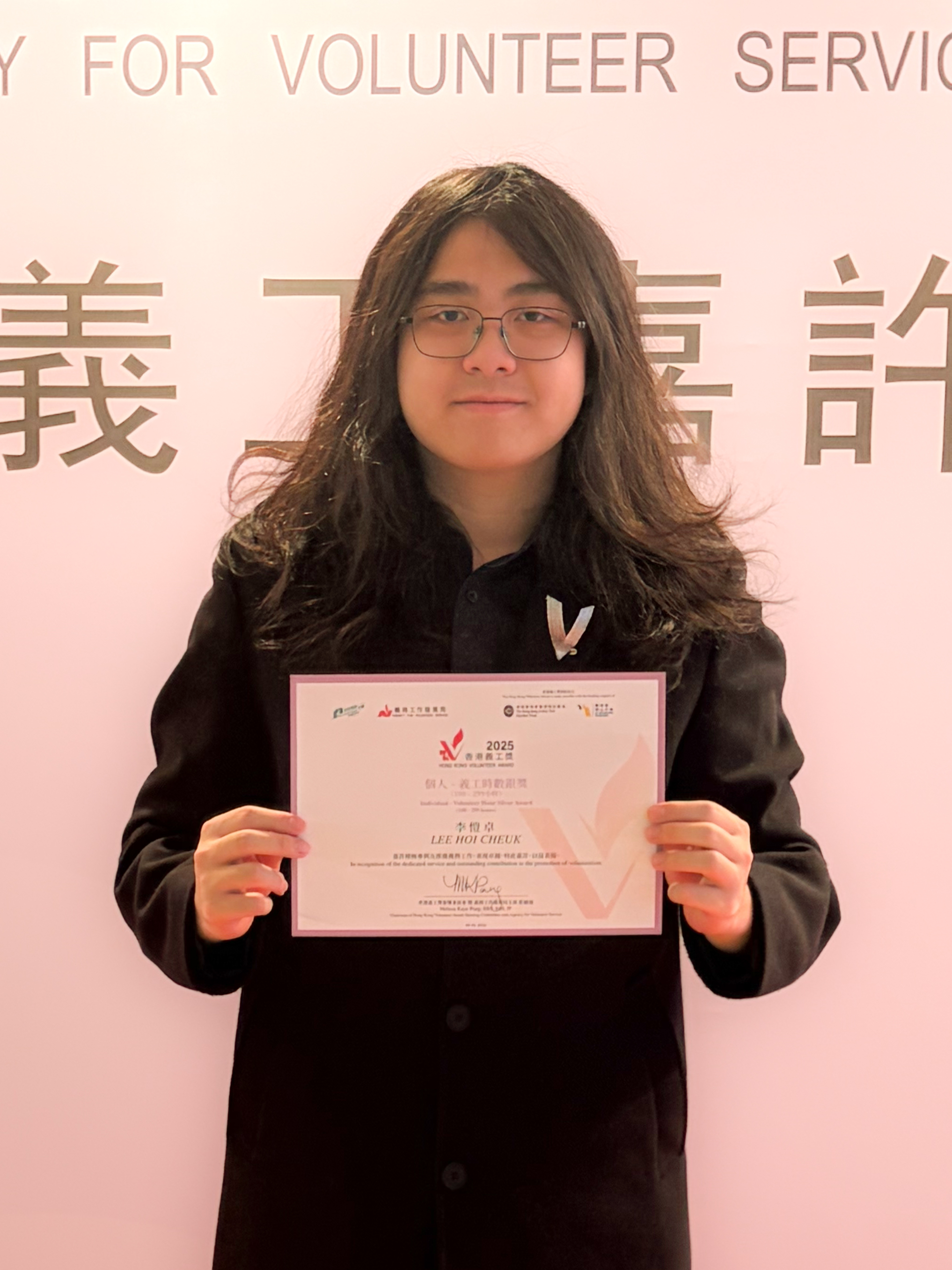
Samuel LEE
Undergraduate Year 3 student majoring in Chemistry
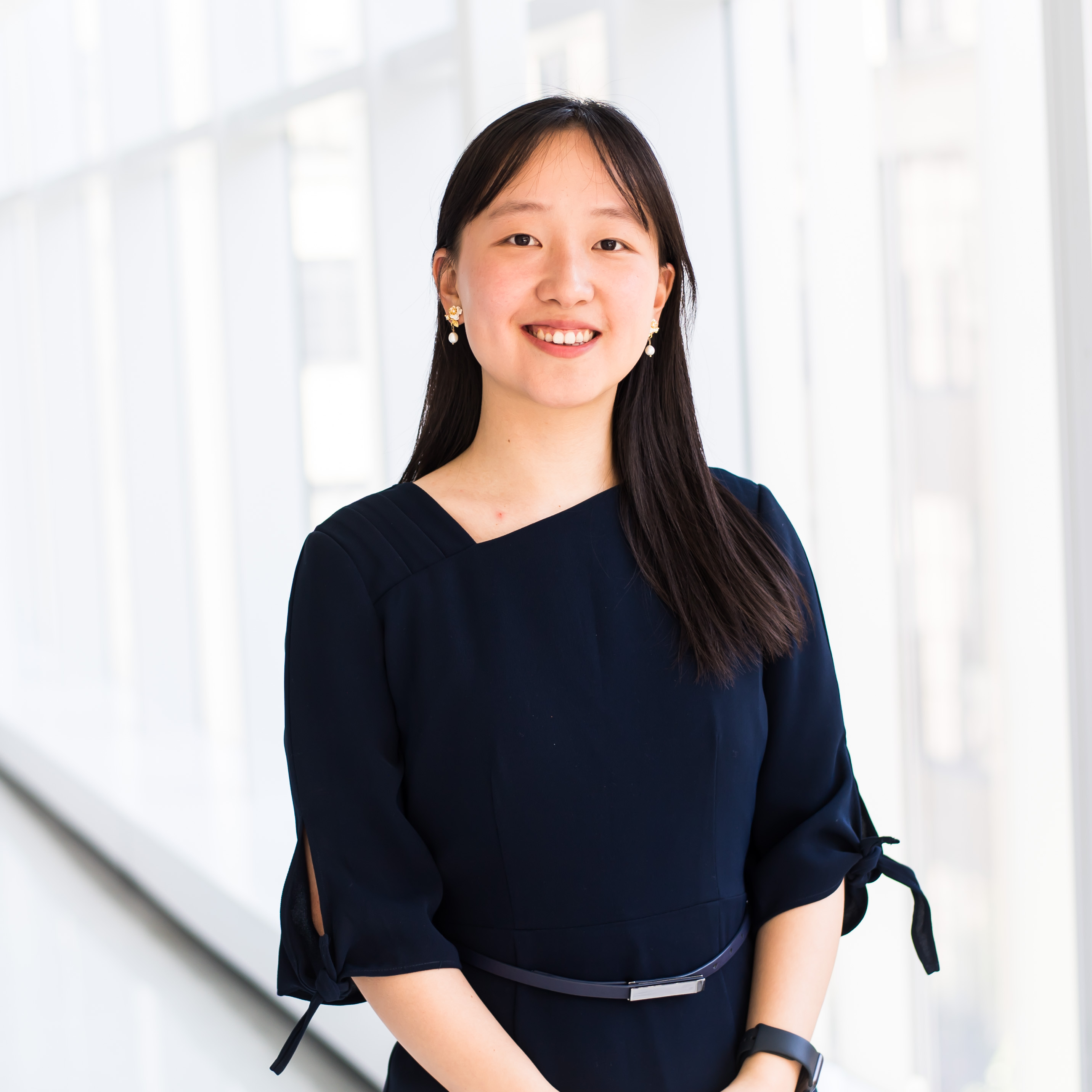
Dr. Abigail WANG
Process Engineer at Lam Research
PhD in Materials Science and Engineering at Massachusetts Institute of Technology, 2025
BSc in Chemistry, 2020
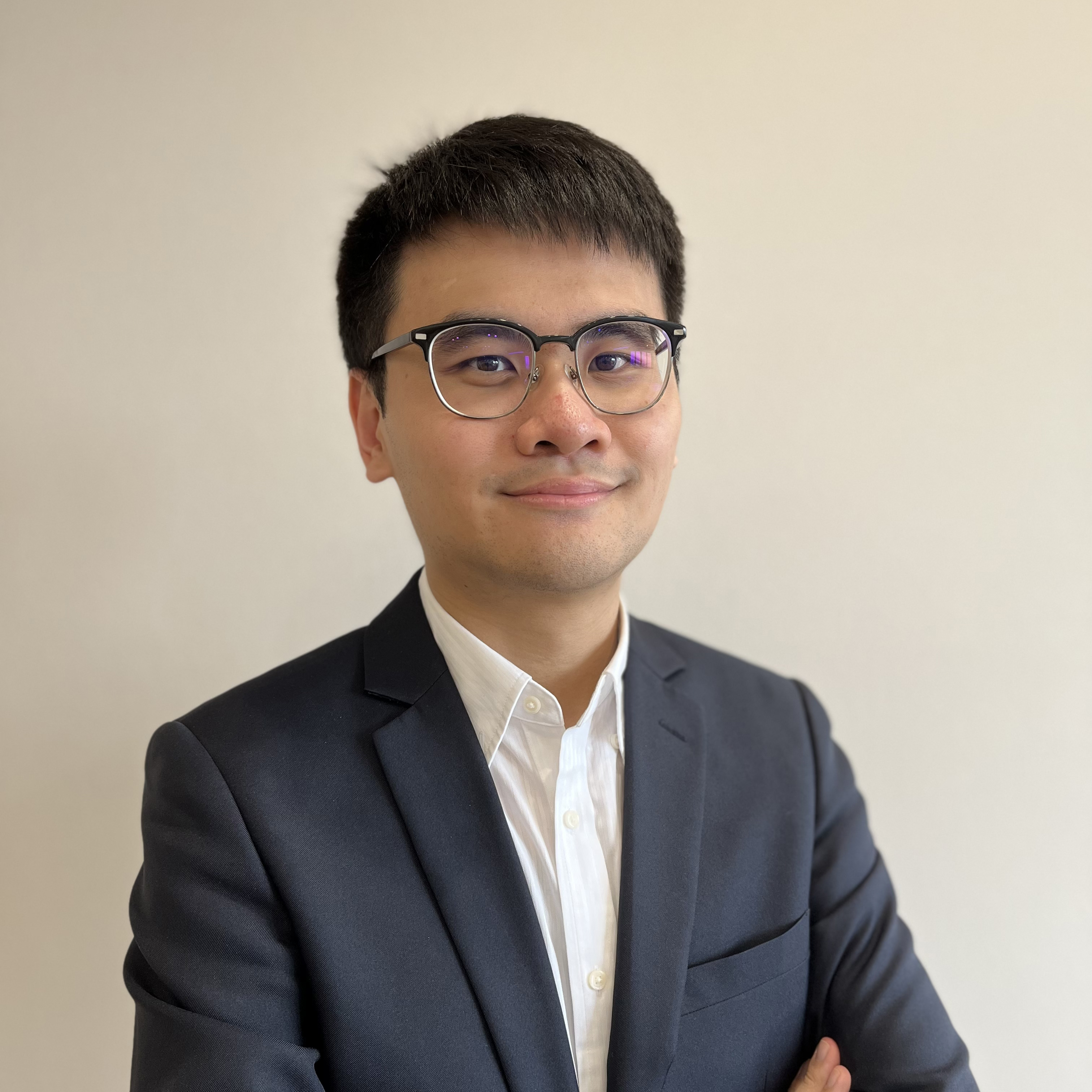
Dr. Ho Nam CHAN
Chief Technology Officer at Biorocks
PhD in Chemistry, 2016
BSc in Chemistry, 2012
What inspired you to major in chemistry?
Samuel
My choice was chemistry because I want to work in the pharmaceutical industry, especially in the drug discovery field. I grew up in an ordinary family, so when we are hit with medical bills, insurance does not always cover everything. We have to look for funding and see who is merciful enough to grant us money to buy those expensive drugs. After learning that drugs can be made by synthesis, I thought there should be a way for companies to find a cheaper route to produce drugs. So that's what I want to do in my career.
Abigail
I'm not familiar with business or engineering because I didn't take those classes back in high school, so I went with science. In the first year of university, we took all kinds of classes. I don't recall having a strong preference, but math and physics were slightly too hard for me. There are lots of unfamiliar English terms in life science because I studied biology in Chinese back in high school. Therefore, chemistry was the least challenging subject for me. I found it OK to learn chemistry, so I chose chemistry. It was a very practical choice.
Ho Nam
When I was in high school, I liked science and got the highest score in chemistry, so I chose chemistry. My mathematics was not that great, so physics was also not for me. I didn't want to memorize too many things, so I didn't like biology. That is the reason I majored in chemistry.
What is your plan at this stage of your career? How has your perspective on chemistry evolved during your time at HKUST and beyond?
Samuel
Back in secondary school my view was naiver. I just thought that I would come here to study, go into the research field, discover some new stuff, and make use of the power of chemistry to solve the problem of high drug prices. But as it turned out – as with basically everything in life – it's not that simple.
Pharmaceutical companies do have their concerns. They are responsible for their shareholders, so they may have no choice but to pursue profit maximization. That means my vision may not come true in the end. But that doesn't mean that I should give up, right? I shall persist because I might one day encounter a company which shares my wish and vision. Even though it might be difficult to control the market price, the goal should still be to lower the cost of diagnostic tests and drugs, so that they can be readily available to the public.
Abigail
Firstly, I found chemistry more difficult than I had expected. Then, I learned that there are many branches inside chemistry, such as material chemistry, computational chemistry, inorganic and organic chemistry, and the areas related to life sciences. It was clear to me that I leaned toward material chemistry because I like looking at nanostructure with an electron microscope or other tools, even though the experiment is at macroscale. I also like the short experiment and project cycles, so that I can achieve a good work-life balance which I value so much. Those who do organic synthesis may need to spend 20 hours or longer for an experiment. These reasons have led me to pursue material science and engineering for PhD. For the next three years, I planned to stay in this field.
Ho Nam
After earning my PhD degree, my lab mate and I founded a startup that develops medical devices for in vitro fertilization (IVF) clinics. It has been eight years now, and we have raised about four rounds of investment and funding. We have also won the HKUST-Sino One Million Dollar Entrepreneurship Competition back in 2019. Currently we are doing clinical trials in hospitals in the Chinese Mainland.
When I was still an undergrad, I joined Professor Hongkai Wu's lab. We used technology like nanofabrication to make microfluidic chips, a kind of chip that manipulates and analyses tiny amounts of fluids. We got to do 3D printing and modeling, electronics, and different kinds of things that is more like analytical chemistry.
When people think of chemistry, they tend not to think about instruments at first. But indeed, most of the chemical discoveries were enabled by the invention of new instruments. When you have techniques like infra-red (IR) spectroscopy and nuclear magnetic resonance (NMR) spectroscopy, you will be able to detect and analyze chemicals. That’s how our understanding of chemistry can evolve. I didn't know this side of chemistry when I was in high school.
What is your favourite chemistry theory and how is it related to everyday life?
Samuel
It's not strictly a chemistry rule, but more a drug rule. It’s called Lipinski’s rule of five, which describes what a good drug should be, like less than 500 daltons in mass, no more than five hydrogen bond donors. The content doesn't really matter; what I want to point out is that in chemistry, many rules are just a rule of thumb with many exceptions. That kind of describes chemistry in a nutshell because many things don’t follow the “rules” and you don't always know why. This rule of five describes how a good drug should be, but there are many successful drugs that don't follow the rule. It suggests that even if you don't follow the book knowledge, as in all chemistry, it does not necessarily lead to a failure, which also means that there is room for discovery.
Abigail
Do you know the recrystallization process? If you recrystallize a substance under certain conditions, all crystals grow in preferred directions. They also form different shapes under different conditions. I find those shapes beautiful. For example, the table salt you use every day can be recrystallized under certain conditions to get the perfect cubic shape. I also remember a research group recorded how different reactions happen and how the products form, also a very pretty process. I even have some big salt crystals back at home. They're really cubic.
Ho Nam
The first thing coming to my mind is a theory called point group theory. It's about symmetry, so you have a molecule that you can rotate. You have mirror symmetry, rotation symmetry, etc. It explains how to think about molecules in three-dimensional space. In real life, things are either symmetrical or asymmetrical. When you see something asymmetrical, you may feel uncomfortable. Then maybe you'll figure out some problems or insights of why that's asymmetrical. I don't know why I remember this. It's actually a bit philosophical.
Beyond technical knowledge, what personal qualities or characteristics do you believe are essential to excel and make an impact as a chemist?
Samuel
There are two of them. The first one is to keep thinking “why.” For example, today my reaction failed. Why? Instead of just repeating it for a few more times, just randomly change some variables and you will eventually hit into one that’s correct. Then think about why and everything will fall into place. When working in a lab, sometimes we are preoccupied with some more important issues like safety, as the chemicals can be dangerous, but when your experiment fails, you really have to pause and step back.
The second one is to have interdisciplinary knowledge. In the story of cisplatin discovery (covered in Issue 027), a physics professor went straight into cancer research after his unexpected discovery of the cancer drug by electrolysis. It shows the importance of have an interdisciplinary vision because you will see a bigger picture and avoid tunnel vision.
Abigail
I feel like you need a lot of patience, because for a lot of experiments you won't have an answer at first. You will likely fail many, many, many times. It is normal even if you don't have any results for a month. Another thing is to pay attention to detail. If you miss them, it's common that you won't have any results that make sense because you didn't notice the problems at first. A lot of very good research came from an accident, too, so whether you can spot the details can make a difference.
Ho Nam
The most important things are passion and curiosity. Passion is important because as an entrepreneur there are lots of people reporting to me and I need to make a lot of decisions every day. You need to spend a lot of time thinking about the situation, the goal of your company and how to achieve it. Facing so many problems and challenges, passion will keep you away from suffering burnout. Plus, when you really like what you are doing, as a researcher or an entrepreneur, you will be willing to spend more time than others. This will result in a higher chance, although not guaranteed, to succeed.
What are some stereotypes surrounding chemistry that you would like to dispel?
Samuel
I do organic chemistry and it really pains me when I hear people misuse the term “organic.” Some food labels might say, “Oh, we're from an organic farm, very healthy. We don't use fertilizers.” The term is almost always coupled with the statement that “We don't have chemicals in it,” which is purely insane. The word “organic” in organic chemistry doesn’t mean that you use natural things but stands for the chemistry surrounding the element carbon. There can’t be a lack of chemicals in anything because a lack of chemicals would mean a lack of, basically, existence. So, that's a common misuse of the word.
Abigail
There’s a stereotype about chemistry majors being somewhat “nerdy.” I did meet a high percentage of people being very smart and hardworking. They could concentrate on one thing and really loved it enough that they wanted to do it 24 hours. I'm the kind of person who cares much about work-life balance, so I once feel like maybe people like me won't be a good candidate for doing research, or for working in science. But later I found that it's not true; all kinds of people can do research.
Ho Nam
People often think chemistry is only about organic synthesis or making drugs. They watch TV series like Breaking Bad and ask if we can actually “cook” like that in an RV. The reality is very different. The necessary precursors are government-restricted, and the solvents involved are incredibly toxic. We perform organic synthesis inside high-tech fume hoods for a reason. It is dangerous and should never be attempted at home.
Meanwhile, chemists also make instruments and materials. When you learn more, you will also find that chemistry is actually intertwined with physics and biology. They are all inseparable.
Do you have any advice for high school students thinking of studying chemistry?
Samuel
You must prepare to dig deep because there's no end to chemistry. You have to study, study and study. When you think you have studied enough and understood all the knowledge of this world, you didn't. The second point is to be patient. If you are eager to succeed very soon or earn quick money, science or chemistry may not be a good choice because it might take tens of years to get to the place you want, and you'll spend 10 more years in doing that. But if you really want to pursue the knowledge of chemistry, the fruit will eventually come down the road.
Abigail
If you are really focused and love chemistry like you just want to do it for your whole life, you can choose as many chemistry classes as you want to find your interest within that. I also suggest exploring as much as possible in university, especially for people who are not sure about what they’re interested in or good at. I took a lot of music courses because I like music a lot. I also took humanities classes like literature. I never regret and still remember what I learned. Funny for like certain chemistry classes, I don't like organic chemistry at all, so I don't remember anything because I never touched it after I graduated.
Besides, exchange programs are really good. I went to Denmark for a summer exchange, and then Switzerland for semester exchange. It was some special time in life that after graduation you won't have the same experience like that, even if you have vacations there.
Ho Nam
When I was a high school student, I never thought I would be an entrepreneur. I don't think you can plan so many years ahead. As a high school student, we can only plan one or two years ahead. Just follow what you like most – if you like chemistry, then join the chemistry department. When you study in university, you will explore and experience much more than you would imagine now. You will see different research groups, different research topics, and other things not related to chemistry at all. When you find something you really like, just go for it. You will spend time on it and gain passion. Eventually, you will have a great chance to succeed.