From Grapes to Diamonds: The Fascinating World of Wine Crystals
By Roshni Printer
Wine Crystals Explained
At the bottom of some wine bottles or on the cork, you may notice small, clear crystals that winemakers call “wine crystals” or “wine diamonds (Figure 1).” Though they can resemble shards of glass, which sometimes surprise consumers, these crystals are completely harmless. They are a natural salt that forms from tartaric acid, an acid naturally present in grapes. In fact, crystals like these once helped unlock one of the most profound ideas in modern science: chirality.
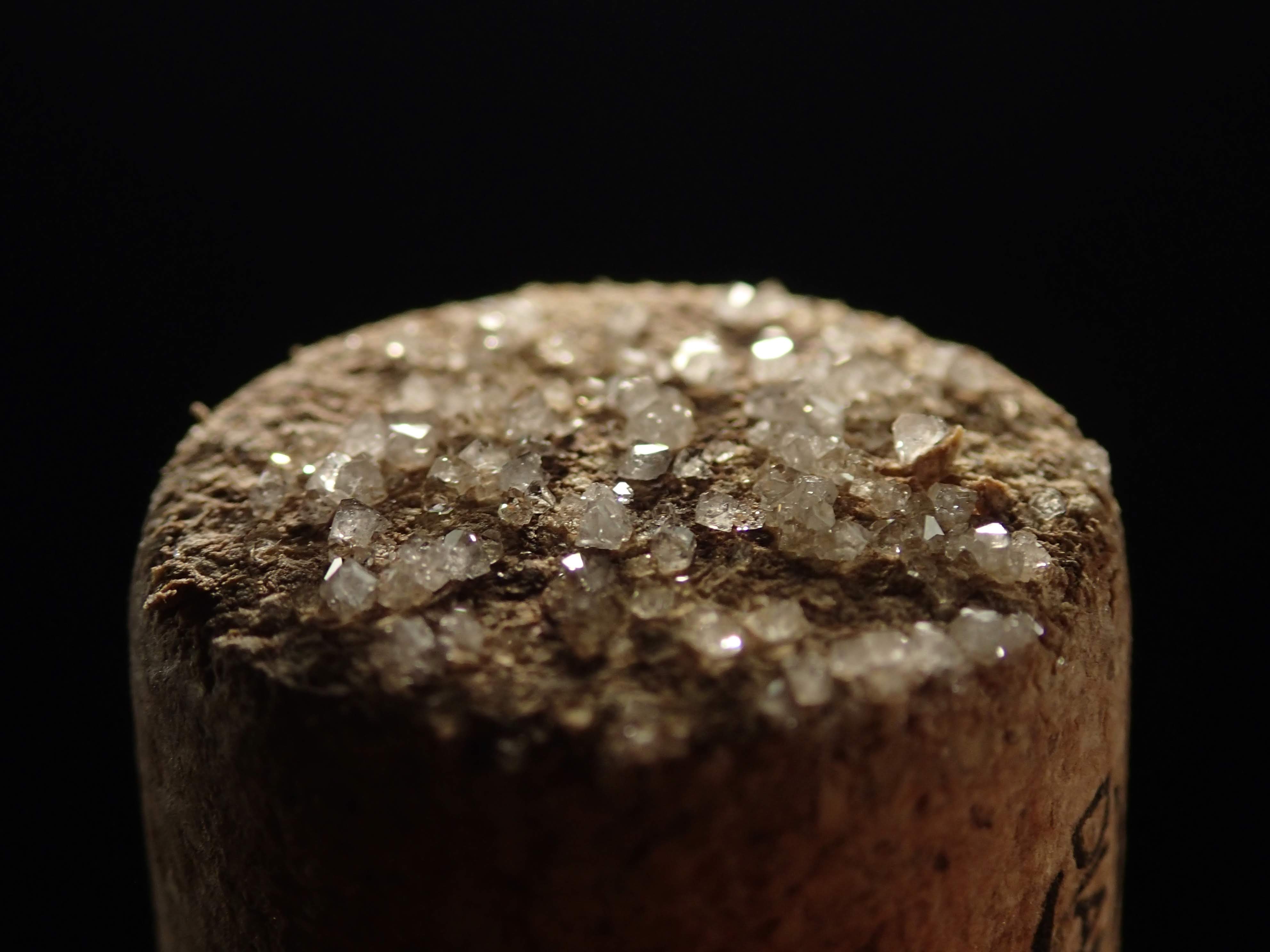
Figure 1 Wine crystals on a cork.
Photo credit: Francesco Santini [1]
The Process of Crystallization: From Grapes to Diamonds
Let’s first examine how these crystals form. Grapes contain several organic acids, but tartaric acid is the signature acid of grapes and wine [2]. During winemaking, depending on the wine’s pH, tartaric acid can lose a hydrogen ion (H+) and become bitartrate, also known as hydrogen tartrate. Meanwhile, wine contains potassium ions (K+) derived from grapes as well. When potassium ions meet bitartrate, they combine to form a salt called potassium hydrogen tartrate (KHT).
Due to its relatively low solubility in water, KHT can “drop out” as crystals under certain conditions [3, 4]. Firstly, its solubility decreases with temperature, so chilling wine in a cold room, fridge, or cool climate encourages crystallization. Also, its solubility in aqueous ethanol drops as the ethanol content rises during alcoholic fermentation, causing KHT to precipitate during the winemaking process.
To avoid consumer’s concerns about food safety, wineries use different ways to prevent post-bottling crystal formation [3]. A common technique is “cold stabilization,” where the wine is chilled on purpose so that the salt crystallizes in storage tanks and can be filtered out before bottling. Other methods include the removal of compounds that involve KHT precipitation, and the introduction of additives to inhibit or decelerate the crystallization process.
Louis Pasteur and the Discovery of Chirality in Tartaric Acid
Although we now have extensive knowledge about tartaric acid and its salts, in the 1800s, tartaric acid presented an intriguing puzzle to scientists. To understand their early experiments, it helps to first understand polarized light. In unpolarized light – such as sunlight – the electric field vibrates in many random directions perpendicular to the light’s direction. However, in plane-polarized light, the electric field vibrates in only one fixed direction (or on a single plane) as the light travels forward.
In early 1800s, scientists have already discovered that when plane-polarized light is passed through the solution of natural tartaric acid or its salts, the plane of polarization rotates clockwise [5]. One day, an industrial chemist, Phillippe Kestner, discovered a mysterious acid from the winemaking process [5]. The mysterious acid, later named paratartaric acid, appeared to share the same chemical composition with natural tartaric acid (at that time they didn’t know the chemical structures) but showed no rotation [6]. This was perplexing because both acids should have behaved the same way.
A French chemist (later known as “the father of microbiology”), Louis Pasteur, approached this mystery from a novel angle. He examined the crystals formed by paratartaric acid under a magnifying glass, and observed that crystals occurred in two shapes that were mirror images of each other (Figure 2) [5, 7]. They were almost identical – but like left and right hands that could not be perfectly placed on top of the other. Pasteur separated these crystals with a tweezer and dissolved them to make two solutions. He found that one solution rotated polarized light to the left while the other rotated it to the right. When mixed in equal amounts, their rotations cancelled each other out.
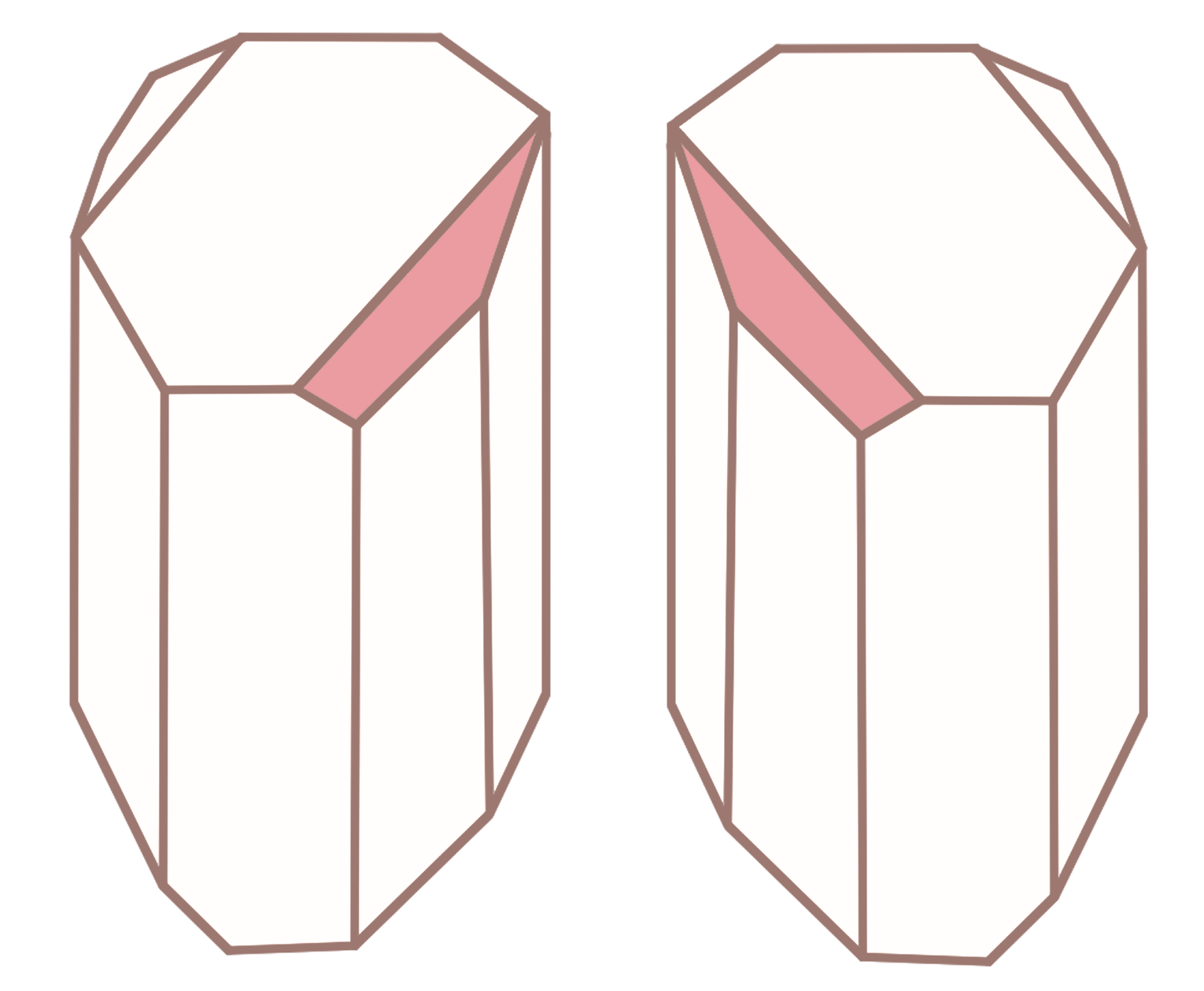
Figure 2 The two types of chiral crystals observed by Louis Pasteur [5].
This discovery introduced the concept of chirality to chemistry. Scientists further deduced that the chirality of tartaric acid crystals might stem from the dissymmetric structure of the molecules [5]. The hypothesis was not proved until 1940s; the structure of tartaric acid was revealed with the availability of rigorous X-ray diffraction analysis [7].
Why Chirality Matters
Intriguingly, chirality matters in nature. A classic example comes from amino acids, the building blocks of proteins. Most amino acids (except glycine) consist of four different atoms or groups of atoms bonded to the central carbon, so there are left-handed amino acids and right-handed amino acids (Figure 3), which rotate polarized light to left and right respectively. Interestingly, almost all proteins in mammals are constructed exclusively by left-handed amino acids [8]. This remarkable preference of handedness also applies to other molecules, like sugars. Enzymes and cell receptors bind strongly to their substrates only when their molecular handedness matches. This explains why many modern medicines must be produced in a specific chiral form: One version may heal, while the mirror image could be ineffective or even harmful.
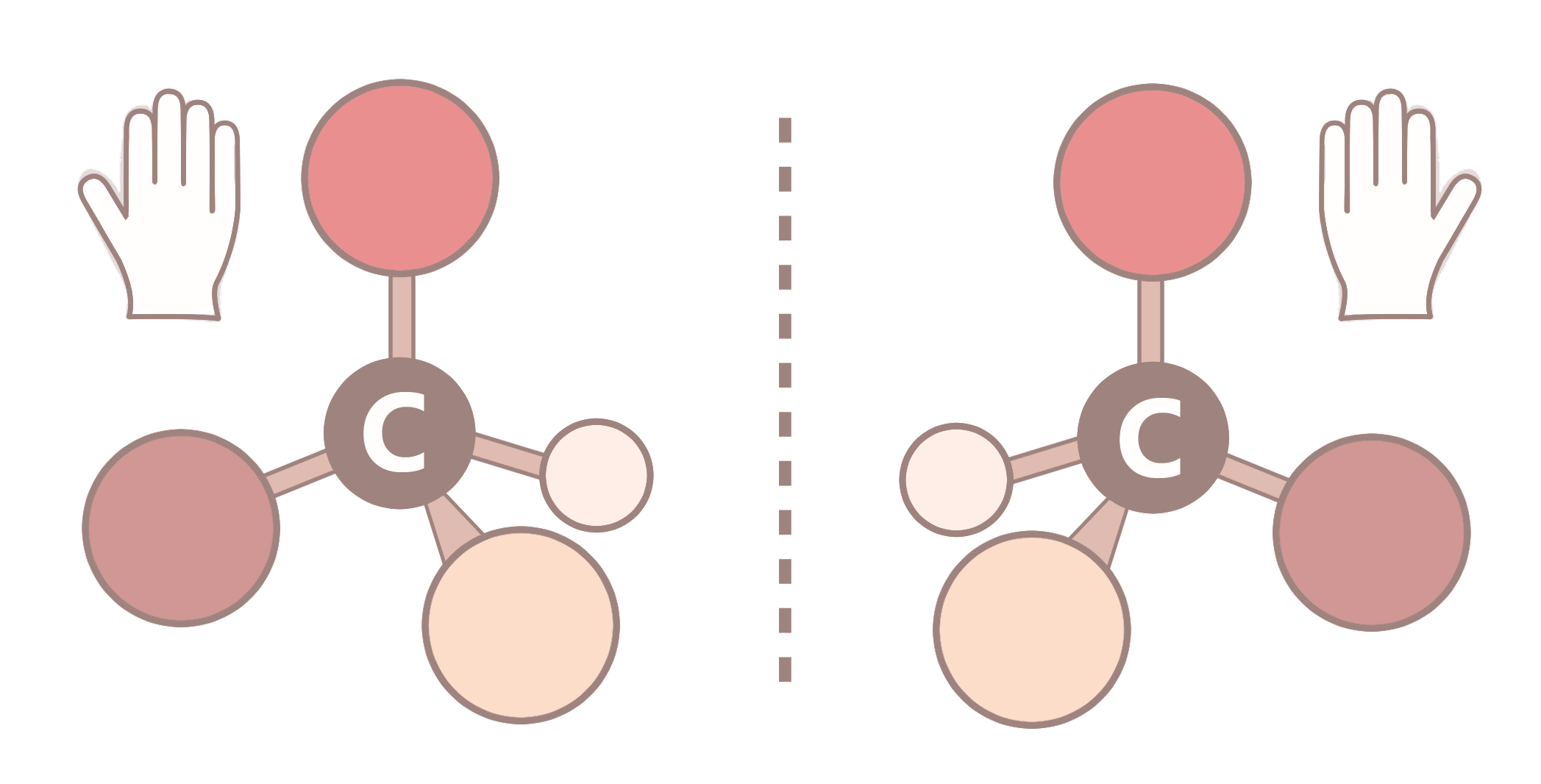
Figure 3 A left-handed and a right-handed amino acid with the central carbon bonded to four different atoms or groups of atoms.
Birefringent Beauty: The Artistic Inspiration from Wine Crystals
Another interesting property of wine crystals is their display of vivid colors when polarized light passes through them under a microscope [9]. When polarized light enters these “birefringent” crystals, it splits into two light waves that travel at different speeds and directions inside the crystal. The two waves can become out of phase with each other. When they recombine as they exit the crystal, they undergo interference – constructively or destructively depending on how their peaks and troughs align. This produces a resultant wave with an altered amplitude and wavelength – and therefore color. As the interaction with light varies with different orientation, the interference generates different bright colors that shift as the crystal is rotated. Contemporary artists and designers have occasionally drawn inspiration from this phenomenon; for instance, installations using polarizing films and birefringent materials create dynamic color displays that change with viewing angles, echoing the optical effects first observed in birefringent crystals.
From Observation to Insight: Pasteur’s Scientific Legacy
Pasteur’s work led to the discovery of the fact that nature distinguishes between left and right, and revealed the existence of a preference that shapes phenomena ranging from light behavior to the fundamental workings of living organisms. In this sense, wine crystals serve as a gentle reminder that profound scientific ideas can emerge from just careful observation of everyday life, and that even the smallest structures may carry clues to the deeper organization of the natural world.
Photo Gallery: The Art of Wine Crystals
These stunning photos of wine crystals were captured by a Canadian photographer, Dr. Robert Berdan, with a digital camera and a polarized light microscope [9]. One can definitively turn a science topic into a creative art project!
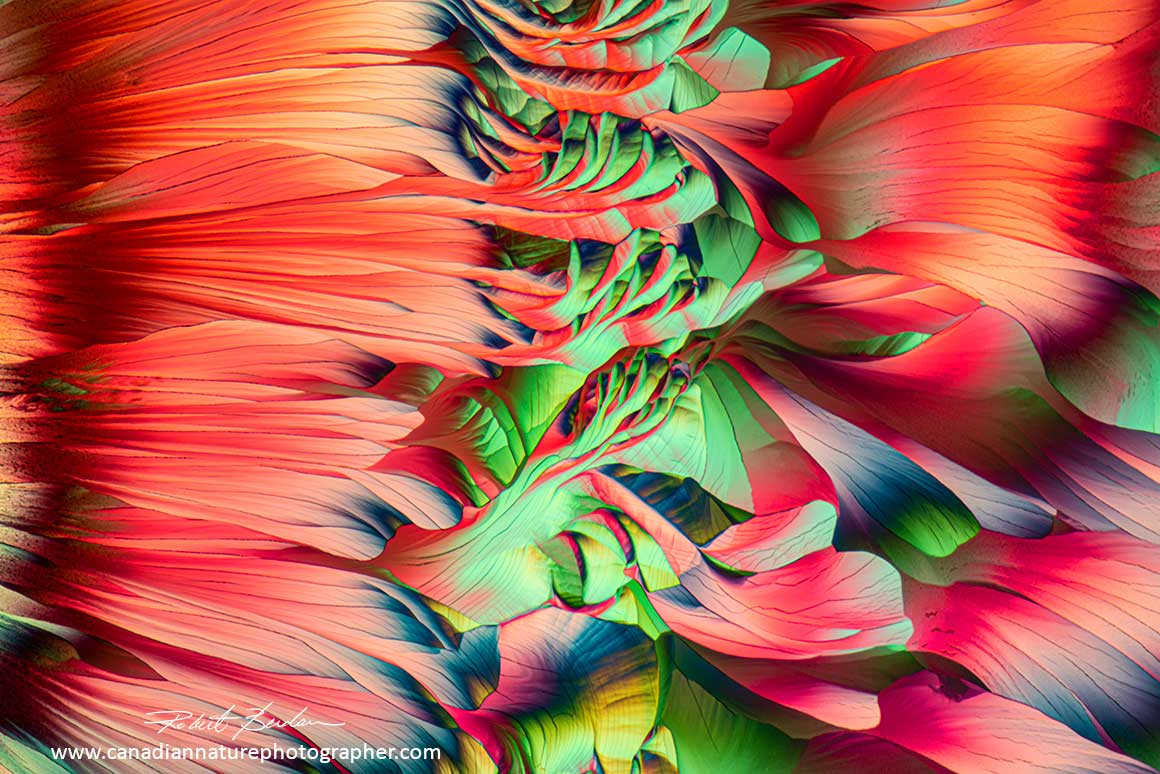
Stoneleigh Pinot Gris crystals by polarizing microscopy 50X.
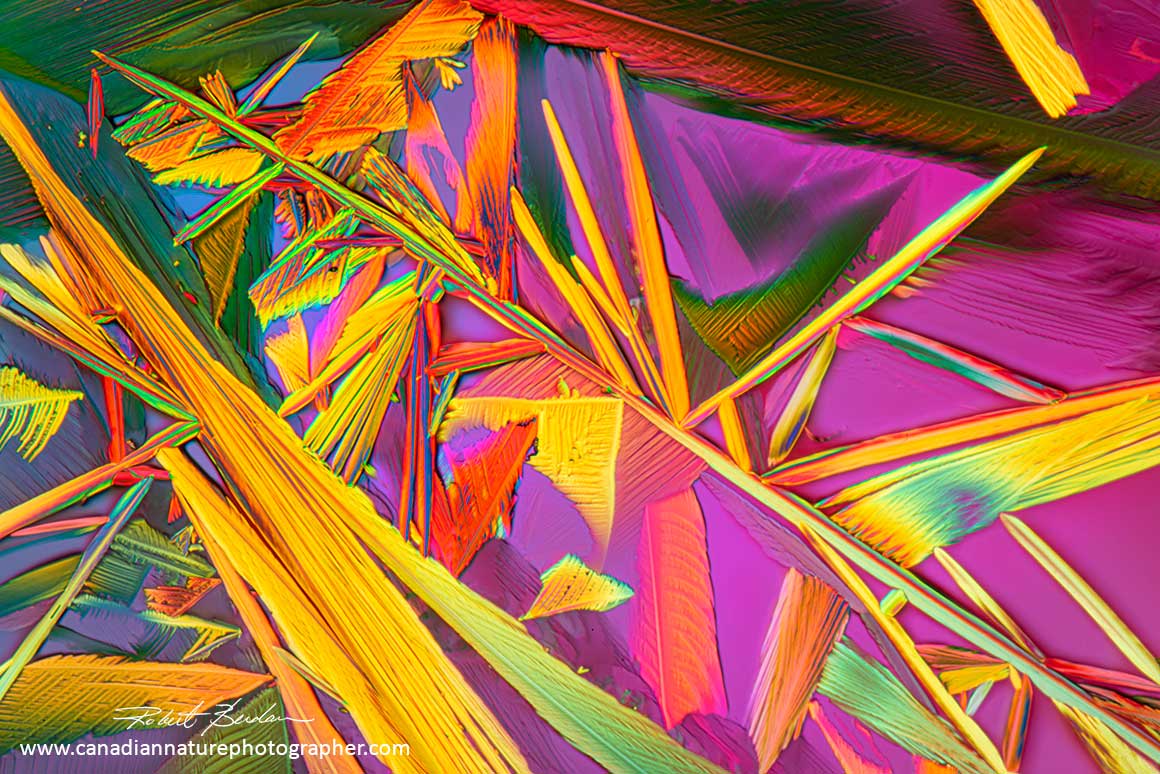
Stoneleigh Chardonnay crystals by polarizing microscopy 50X. Note the lack of smooth curves in these crystals.
More about Dr. Berdan’s works: https://www.canadiannaturephotographer.com/index.html
References
[1] Santini, F. (2020, April 19). Tartrate crystals on a cork [photograph]. Wikipedia. https://en.wikipedia.org/wiki/Tartrate#/media/File:Tartrate_on_cork.jpg

[2] Berdan, R., & Berdan, B. (2023, February 24). The Science & Art of Wine Crystals by Polarized Light Microscopy - Abstract Art. The Canadian Nature Photographer. https://www.canadiannaturephotographer.com/wine_crystals.html
[3] Coulter, A., Holdstock, M. G., Cowey, G. D., Simos, C. A., Smith, P. A., & Wilkes, E. N. (2015). Potassium bitartrate crystallisation in wine and its inhibition. Australian Journal of Grape and Wine Research, 21, 627–641. https://doi.org/10.1111/ajgw.12194
[4] Australian Wine Research Institute. (n.d.). Potassium Instability. https://www.awri.com.au/industry_support/winemaking_resources/fining-stabilities/hazes_and_deposits/potassium_instability/
[5] Vantomme, G., & Crassous, J. (2021). Pasteur and chirality: A story of how serendipity favors the prepared minds. Chirality, 33(10), 597–601. https://doi.org/10.1002/chir.23349
[6] Halford, B. (2018, October 1). The mysteries of Louis Pasteur’s mislaid lab books. C&EN, 96(39), 21–23. https://pubs.acs.org/doi/10.1021/cen-09639-feature2
[7] Derewenda, Z. S. (2008). On wine, chirality and crystallography. Acta Crystallographica Section A: Foundations and Advances, 64(1), 246–258. https://doi.org/10.1107/S0108767307054293
[8] Jones, M. (2025, April 6). Isomerism. Encyclopedia Britannica. https://www.britannica.com/science/isomerism
[9] Berdan, R. (2024, October 26). Summer 2024 Wine Crystals by Polarized Light Microscopy. The Canadian Nature Photographer. https://www.canadiannaturephotographer.com/Summerwinecystals2024.html