Do You See What I See? A Guide to Nature's Wildest Eyes
By Daria Zaitseva
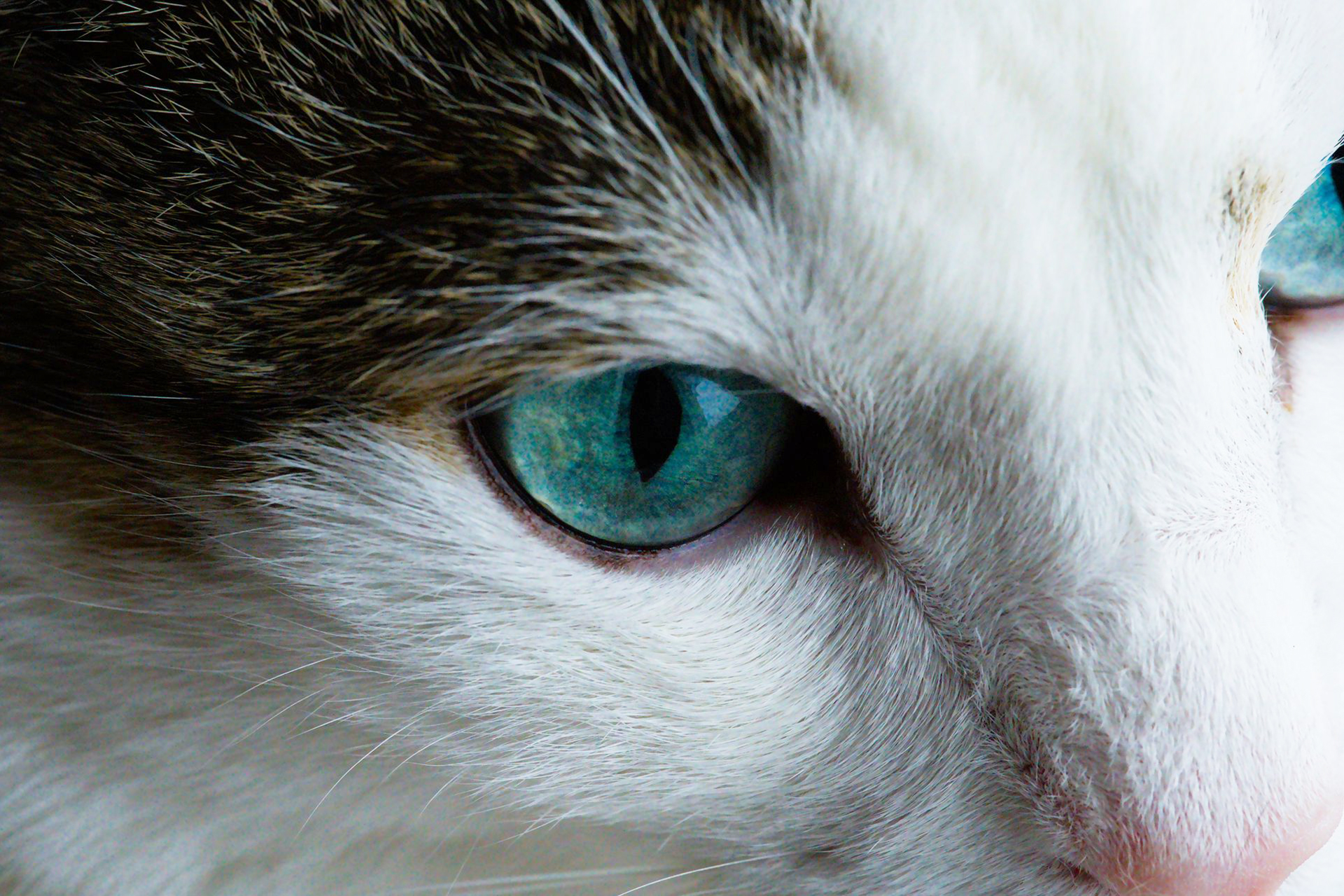
Introduction
Vision is an important sense we have. The human eye is often regarded as highly advanced, yet we are easily outperformed: A fly's visual response is sixfold faster than ours, and a mantis shrimp's range of color vision is quadruple our own [1]. Along the long history of evolution, most species developed their unique ways of looking at this world. We will explore some pioneers and champions of vision.
What Counts as Vision?
“Vision” can be defined as the biological ability to detect and convert light into meaningful information about the environment by combining photoreception in the eye with neural processing in the nervous system. Because of the lack of neural processing element, plants and bacteria are not generally considered to have vision, although they can perceive and react to light.
How Did Vision Come About?
Before we delve into how vision first came about, we must consider cells that are sensitive to light. These simple photoreceptors can only sense whether light is present; they cannot “see” clear images without a lens and a sufficiently complex nervous system to process visual information [2]. These light sensors can drive basic functions like phototaxis, the movement toward or away from light, and circadian rhythm, the internal biological clock of an organism.
Along the evolution to a more complicated eye, the flat neural tissue containing photoreceptors sinks inward, creating a small dip called a pigment cup [2, 3]. This indentation changes the physics of light collection: On a flat surface, light from all directions can reach the photoreceptors simultaneously, but once the patch curves into a cup, a light source from the right will only strike the cells on the left wall of the cup, while casting a shadow on the right. For the first time, it became possible to tell the light direction.
In some mollusks, the pigment cup continued to deepen [4]. Its rim began to curve further inward, narrowing the opening at the top. This created a small, restricted hole called an aperture. Similar to a pinhole camera, such a narrow structure forces light rays to focus and cross, projecting a flipped, dim, but roughly recognizable image of the outside world directly onto the photosensitive region. Now the animals gain the ability to discern basic shapes and movement [5]. We can still see this exact eye mechanism in the modern Nautilus [4], a marine mollusk that navigates deep waters entirely using pinhole vision.
However, the pinhole eye has a major physical drawback: The small hole restricts the entry of light, making the picture incredibly dark [4]. If the hole is opened wide to let in light, the image becomes completely blurry. Fortunately, evolution offered an alternative solution: lens [2]. The lens at the opening of the pigment cup focuses multiple rays down into a single, sharp image on the retina by refraction. The visual information can then be sent to the primitive brain that had been evolved for visual processing. Eureka! We no longer have to choose between a bright, blurry image and a sharp, dark image; we can finally see a bright, highly focused picture.
The Human Eye
The modern human eye represents a fascinating culmination of this lineage. Unlike most other primates, humans evolved a highly visible white sclera surrounding the iris, creating a frame with a stark contrast that allows us to track each other's gaze. This is a crucial adaptation for emotion perception and social interaction [6]. Our flexible, muscle-controlled lenses dynamically distort to shift focus between close-up and distant objects. At the same time, the visual cortex works every second to stitch these inputs together, seamlessly erasing our blind spots and flipping the retina's upside-down images into a cohesive, three-dimensional world.
The Compound Eye of Insects
While humans process one main visual image at a time, most insects operate on a completely different system designed for split-second reaction, where information is processed simultaneously using high-speed parallel pathways [7]. Insects, like dragonflies and ants, have compound eyes made up of thousands of microscopic units called ommatidia, where light is refracted by a corneal lens and a crystalline cone before reaching the photoreceptor region containing visual pigment. Each ommatidium detects an image at a slightly different angle, giving insects an incredible ability to track motion. While humans can only resolve movement slower than 30 images per second, some bees and flies can track motion at up to 200 images per second! That’s why when you try to swat a fly, it sees your hand clearly in extreme slow motion!
The Compound Eye of Mantis Shrimps
While mantis shrimps are a common seafood on our dinner table, did you know that they also have a compound eye with photoreceptors that detect 12 colors from ultraviolet to red [8]? Surprisingly, these marine creatures are not good at differentiating colors. Humans can perceive colors in the whole visible spectrum because we have a well-developed brain to analyze the raw signals received from three types of color cones (red, green, and blue). By comparing the relative intensities of those signals, our brain can “mix” the three primary colors to perceive the colors of the rainbow. However, mantis shrimps can barely do so with their small brains [9]. They can only see discrete colors directly detected by those 12 photoreceptors. Across the ommatidia in their compound eye, only a thin band of six rows of ommatidia in the middle is responsible for color vision. As a result, they must physically roll their eyes to see the color of an object.
Conclusion
Ultimately, the diversity of eyes shows that sight never evolved all at once, but rather sculpted over 600 million years by the relentless pressure of survival. What began as a humble cluster of light-sensitive cells gradually specialized into an astonishing array of optical tools, from high-speed insect compound systems to the detail-oriented eyes of humans. In the grand theater of evolution, nature has spent eons proving that there is always more than one way to look at this fascinating world.
References
[1] Queensland Brain Institute, The University of Queensland. (2020, April). Animal Vision: Seeing Through Different Eyes. The Brain, 5, 10–11. https://qbi.uq.edu.au/brain/nature-discovery/animal-vision-seeing-through-different-eyes
[2] Lamb, T. D., Pugh, E. N., Jr., & Collin, S. P. (2008). The Origin of the Vertebrate Eye. Evolution: Education and Outreach, 1, 415–426. https://doi.org/10.1007/s12052-008-0091-2
[3] Nordsieck, R. (n.d.). The Evolution of the Mollusc Eye. The Living World of Molluscs. https://www.molluscs.at/mollusca/eyes.html
[4] Land, M. (2020, June 1). Single-chambered eyes. Encyclopædia Britannica. https://www.britannica.com/science/photoreception/Single-chambered-eyes
[5] Hendry, L. (n.d.). How do other animals see the world? Natural History Museum. https://www.nhm.ac.uk/discover/how-do-other-animals-see-the-world.html
[6] Jessen, S., & Grossmann, T. (2014). Unconscious discrimination of social cues from eye whites in infants. Proceedings of the National Academy of Sciences of the United States of America, 111(45), 16208–16213. https://doi.org/10.1073/pnas.1411333111
[7] College of Agriculture and Life Sciences, NC State University. (2015). Photoreceptors. https://genent.cals.ncsu.edu/bug-bytes/senses/photoreceptors/
[8] Land, M. F., & Osorio, D. (2014). Extraordinary Color Vision. Science, 343(6169), 381–382. https://doi.org/10.1126/science.1249614
[9] Zaidi, Q., Marshall, J., Thoen, H., & Conway, B. R. (2014). Evolution of Neural Computations: Mantis Shrimp and Human Color Decoding. i-Perception, 5(6), 492–496. https://doi.org/10.1068/i0662sas